
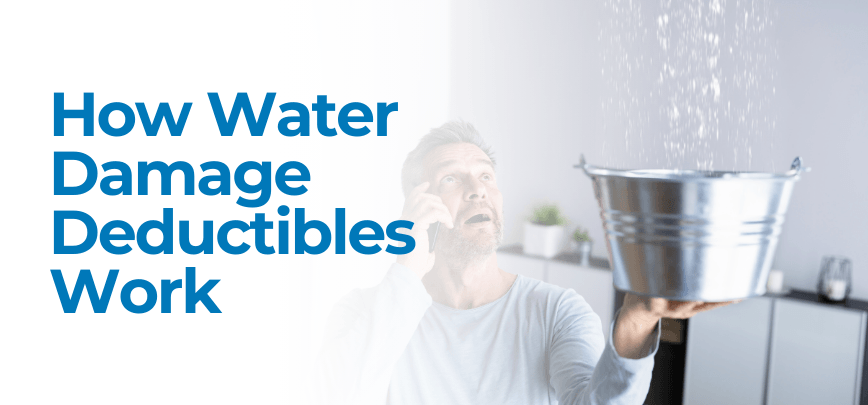
Water damage is rarely something homeowners plan for. It starts quietly, a heavy rainfall, a backed-up drain, a small leak that goes unnoticed. Then suddenly, there’s water in the basement, flooring is damaged, and cleanup crews are on site. It’s at this point, when stress is already high, that many homeowners first discover how much their deductible really matters.
Why Water Claims Work Differently
Most homeowners are familiar with their standard deductible, the amount they pay out of pocket when making a claim. What’s often overlooked is that water-related claims may not use that same deductible.
Depending on your policy, water damage may:
- Have its own, higher deductible
- Be subject to specific endorsements
- Be covered only under certain conditions
This means a water claim doesn’t always follow the same rules as fire or theft.
It All Comes Down to the Source of the Water
Insurance doesn’t treat all water damage the same way. Coverage and deductibles are typically tied to how the water entered the home.
For example:
- A burst pipe or failed appliance is usually considered sudden and accidental
- Sewer backup often requires optional coverage
- Flooding from heavy rain or spring thaw may only be covered if overland water protection is in place
Each category can carry its own deductible, limit, or exclusion. Two water claims can look similar but be handled very differently by a policy.
Why Water Deductibles Are Often Higher
Water losses are expensive, frequent, and sometimes affect many homes at once, especially during Ontario’s spring thaw or periods of heavy rainfall. Insurers respond to that risk by applying higher deductibles or separate water deductibles.
While higher deductibles can feel frustrating, they’re also one of the ways insurers manage large-scale losses and keep coverage available.
Spring Thaw: A High-Risk Season
Spring thaw is a prime example of how quickly water damage can occur. Frozen ground limits drainage, and melting snow has nowhere to go; overwhelmed systems can push water toward foundations and basements.
Even homes with good maintenance and grading can experience water issues when conditions align.
What’s Worth Reviewing Before There’s a Problem
Rather than discovering the details during a claim, homeowners should review:
- Which types of water damage are covered
- Whether sewer backup and overland water coverage are included
- The deductible is attached to each type of water claim
- Coverage limits and maintenance-related exclusions
These details directly affect how much a homeowner pays out of pocket after a loss.
At Merit Insurance, our role isn’t just placing coverage; it’s helping clients understand how it works in real situations. We explain deductibles, endorsements, and water risks in plain terms, so there are fewer surprises when it matters most.
If you’re unsure how your water damage deductible applies, or want to review your coverage ahead of the spring thaw or heavy rain season, our team is here to help.